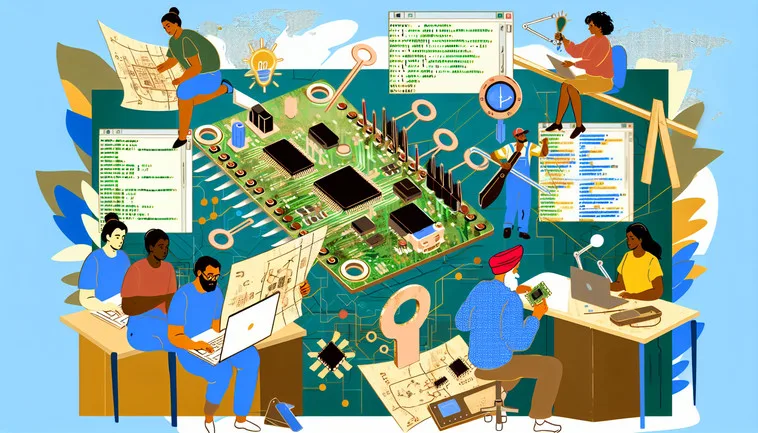
In the fast-paced world of technology, developers are continuously exploring and embracing innovative tools. Recently, a new wave of excitement has circled around the ESP32-C3 Super Mini Boards, known for their compact design and impressive performance capabilities. However, a particular variant without built-in flash memory has sparked discussions among professionals in the tech community. These boards, while intriguing, come with a host of challenges that developers need to carefully consider before diving in.
The absence of on-board flash memory means that users must rely entirely on external storage solutions to run applications on these mini boards. For developers accustomed to systems where flash memory comes standard, this shift necessitates extra planning and implementation steps. While this might sound like a minor inconvenience, it can significantly impact development timelines and complexity, especially for projects that demand high-speed processing or are operating under stringent resource constraints.
Furthermore, using external flash requires a comprehensive understanding of both the board’s architecture and the memory solution deployed. Developers need to master the integration process, ensuring there is seamless communication between the external flash and the microcontroller. Any oversight in this setup can lead to unexpected bugs and performance issues, which can be particularly challenging to troubleshoot in resource-limited environments.
However, it’s not all drawbacks. For those willing to tackle the additional complexity, the flash-less ESP32-C3 offers a remarkable opportunity for customization. By choosing the specific type and size of external flash, developers can tailor their systems to fit exact project requirements, potentially optimizing for speed, power consumption, or data capacity as needed.
Another factor to consider is cost-efficiency. While the initial appeal of a lower-priced flash-less board is evident, developers must weigh these savings against the cost of additional components and the potential need for increased development time. Essentially, cost evaluations should include both tangible components and the often-overlooked development and maintenance overheads that come with non-standard system configurations.
In summary, entering the realm of flash-less ESP32-C3 boards is an expedition for those with a particular appetite for customization and a tolerance for increased complexity. It is crucial that developers not only evaluate their immediate project requirements but also anticipate future needs and potential issues. Networking with the community and staying abreast of emerging tools and resources can help mitigate some of these challenges.
Ultimately, the decision to deploy a flash-less ESP32-C3 should not be made lightly. As technology advances, the burden on developers may well lessen, but until then, thoughtful consideration and strategic planning are paramount to harnessing these boards’ full potential. By approaching these exciting challenges with due diligence, developers can turn potential hurdles into significant innovations.