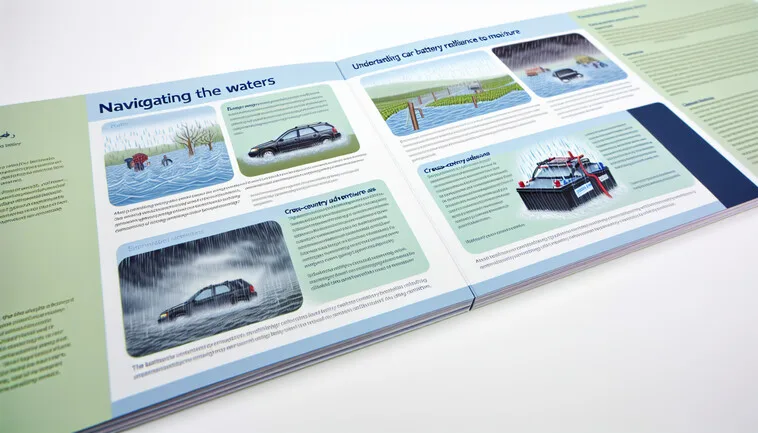
Car batteries are the unsung heroes of our vehicles, offering uninterrupted power from the daily commute to cross-country adventures. But what happens when these essential components come into contact with water? If you’ve ever worried about your car battery getting wet, you’re not alone. Many car owners find themselves wondering if a splash or soak spells certain doom for their vehicle’s power source.
At face value, the idea of a battery—laden with electrical charge—getting wet might seem like a recipe for disaster. However, most modern car batteries are designed with a level of water resistance. The majority are sealed units, crafted to withstand splashes and brief encounters with moisture. This design protects the internal components, ensuring that brief episodes with rain or car washes won’t lead to immediate battery failure.
It’s crucial, though, to consider the scenarios where car batteries face more than just a light drizzle. Submerging a battery, for instance, if a vehicle is caught in flooding conditions, is another story. Water can potentially seep into the vents, reaching internal components and causing short circuits or other damage. In such cases, it’s vital to dry the battery thoroughly and have it inspected by a professional.
The chemical reactions within a car battery—mainly those involving lead-acid—mean that exposure to excessive moisture can complicate things further. A wet battery can corrode, internally and externally, affecting its connections and ultimately its ability to hold a charge. This corrosion is a silent but deadly process, slowly reducing the efficiency of your battery over time until it needs replacement.
If you suspect your car battery has been submerged or exposed to more than its fair share of water, the best plan of action is attentiveness and preventive care. Start by carefully drying the exterior and ensuring the terminals are clean and free from corrosion. It’s advisable to safely disconnect the battery and have an experienced technician assess any water infiltration risks.
An important preventive measure is to regularly inspect your vehicle’s battery housing and keeping it clean and debris-free. This ensures water is less likely to pool around the battery during adverse weather conditions. Additionally, understanding your vehicle’s vulnerability during stormy seasons can help you strategically park or store it safely away from potential flooding scenarios.
In conclusion, while a brief encounter with moisture isn’t necessarily a death sentence for your car battery, being informed and proactive can mitigate risks. Understanding the limitations and resilience of your car battery is essential to navigating any weather-related incidents. Treat your battery with care, and it will reward you with years of reliable service, even when the forecast seems bleak.