“`html
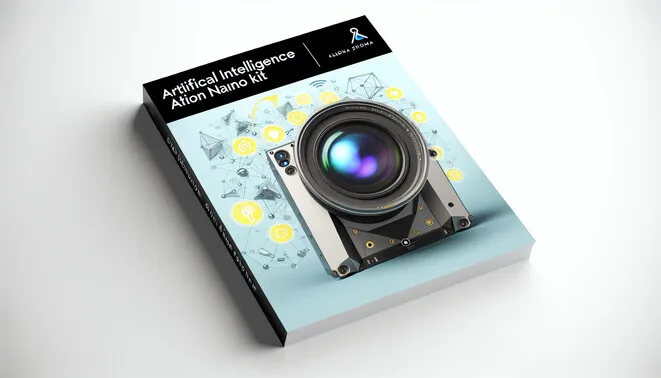
Introduction to the Jetson Orin Nano Super Developer Kit
The Jetson Orin Nano Super Developer Kit marks a significant advancement in AI computing, particularly for edge applications. With its powerful NVIDIA GPU architecture, the kit packs impressive compute performance in a compact form factor, making it ideal for developing Large Language Models (LLMs). The Orin Nano features a remarkable increase in Tensor core capabilities, enabling enhanced deep learning inference and training efficiency.
Designed to support over 100 TOPS (Tera Operations Per Second), the kit allows developers to run complex AI models locally, effectively reducing latency and offering real-time AI responses. Its integration with the NVIDIA DeepStream SDK further empowers developers to build and deploy AI-powered video analytics applications. For those looking to maximize performance while keeping costs and power consumption manageable, the Jetson Orin Nano represents a game-changing solution in AI hardware, setting new benchmarks for edge AI development.
For more insights on the intersection of AI and development, check out our article on AI Development Insights.
Setting Up Your Developer Kit for AI Projects
Setting up your Jetson Orin Nano for AI projects is an essential first step towards developing powerful applications. Follow these steps to unbox, prepare, and install the necessary software:
- Unboxing and Physical Setup:
- Carefully remove the Jetson Orin Nano from its packaging.
- Connect the board to a suitable power supply through the barrel jack.
- For maximum performance, use a heatsink if not integrated, and ensure proper ventilation.
- Initial Boot and Configuration:
- Connect a keyboard, mouse, and monitor via HDMI.
- Power on the device. Follow the on-screen instructions to set up basic configurations like language and Wi-Fi.
- Updating the System:
Once booted, open a terminal and update the system packages by running:
sudo apt update && sudo apt upgradeEnsure the firmware is up to date for optimal performance and compatibility.
- Installing JetPack:
Download the latest JetPack SDK from NVIDIA’s official website. [Source: NVIDIA Developer]
Follow the installation guide provided. JetPack includes essential libraries, development tools, and APIs to support AI frameworks.
- Configuration of JetPack:
During installation, you can select components. For LLM projects, ensure that CUDA Toolkit, TensorRT, and cuDNN are included. Once installed, verify by checking the versions using
nvcc --versionandnvidia-smi. - Testing the Installation:
Run sample applications provided within the JetPack installation to verify the setup. These samples will help ensure that the software is correctly installed and functioning as intended.
- Start Developing:
Now that your Jetson Orin Nano is set up, explore frameworks like TensorFlow or PyTorch for LLM development. You can use pre-trained models or build your own models tailored to specific applications.
By following these steps, you will be well on your way to creating your own AI projects using the powerful capabilities of the Jetson Orin Nano. For further insights on AI development, check out our article on AI Development Insights.
Building and Deploying Large Language Models
Building and deploying large language models (LLMs) such as Llama-3.1-8B on platforms like Jetson Orin Nano can be effectively achieved using frameworks like TensorRT-LLM and Hugging Face’s Transformers.
Framework Selection
- TensorRT-LLM: This framework excels in optimizing deep learning models for inference, particularly in environments where computing resources are limited. It leverages NVIDIA’s TensorRT for high performance, allowing LLMs to run efficiently on edge devices. The integration of TensorRT with NVIDIA hardware means that developers can maximize performance while minimizing power consumption, which is critical for deployment on devices like the Jetson Orin Nano.
- Hugging Face Transformers: This library provides pre-trained models that can be fine-tuned for specific tasks, significantly reducing the amount of data and compute required to train LLMs. With Hugging Face, developers can readily access models like Llama-3.1 and have a robust ecosystem for community support, model sharing, and documentation that makes deployment straightforward.
Deployment Process
- Model Training: Utilize Hugging Face’s APIs to train your LLM. Start by setting up your environment on the Jetson Orin Nano, then use data relevant to your application. With the model architecture already defined, you just need to specify training parameters.
- Optimization with TensorRT: After training, convert the model to TensorRT format. This involves quantization methods like FP16 or INT8 to reduce the model size and improve inference speed, which is vital for real-time applications.
- Edge Deployment: Deploy the converted model to your Jetson Orin Nano. Ensure that you configure the runtime environment by installing the necessary dependencies and using TensorRT’s APIs for model inference. The deployment should be tested thoroughly to validate performance and accuracy against expected benchmarks.
Hands-On Resources: For further insights, consider exploring our guides on practical AI implementation practices, such as “Build Your Own Private AI Assistant” and “Ultimate Guide to Local AI Platforms” for context on environments that can host LLMs effectively.
For more detailed implementation steps and community resources, visit Hugging Face’s documentation or NVIDIA’s developer forums, as these platforms provide ongoing support and updates relevant to model optimization and deployment strategies. For best practices on deploying models in production environments, check our article on How Artificial Intelligence is Transforming Our World.
Real-World Use Cases and Applications
Local LLM inferencing is revolutionizing various sectors by enhancing efficiency and minimizing response latency. In robotics, for example, these models facilitate real-time decision-making, enabling autonomous systems to process vast amounts of data and respond to environmental changes almost instantaneously. As noted in recent studies, local inferencing on edge devices such as drones and factory robots can significantly streamline operations, reducing downtime and improving productivity [Source: Virtual Home Lab].
Smart cities leverage local LLMs for traffic management, public safety, and energy efficiency. Real-time traffic predictions, powered by LLMs, can adjust traffic light patterns dynamically to reduce congestion and emergency response times [Source: Virtual Home Lab]. Furthermore, by integrating AI into public services, cities are optimizing resource allocation, from managing waste pickups to enhancing public transport schedules.
Given these advancements, industries are investing increasingly in AI technologies that support local inferencing capabilities. Companies are not just adopting AI for operational efficiency but also creating applications that directly interface with citizens, providing tailored services, and enhancing overall community engagement [Source: Virtual Home Lab].
As we observe the rapid adoption of these technologies, it’s evident that local LLM inferencing is not just a trend; it’s becoming a fundamental component in shaping smarter, more responsive infrastructures across the globe.
Optimization Tips and Best Practices
To optimize the performance of your Jetson Orin Nano, consider implementing these key strategies:
- Power Modes: Leverage the various power modes available on the Jetson Orin Nano. Use “Max-N” mode for peak performance during intense computations, while “Max-Q” is ideal for balancing power consumption with performance for less demanding tasks. Adjusting power modes optimally can help maintain system temperature and efficiency.
- Model Quantization: Utilize model quantization to reduce the memory footprint and improve execution speed. By converting models from floating-point to lower precision (like INT8), you can achieve significant enhancements in inference speed while preserving accuracy. NVIDIA’s TensorRT provides tools to perform this efficiently.
- Community Recommendations: Engage with the Jetson community for the latest in optimization techniques. Forums and GitHub repositories regularly share insights on optimizing applications for edge AI, including hardware-specific tips and best practices for software deployment.
- Efficient Data Handling: Optimize data pipelines by using efficient data formats and batching. This minimizes data transfer times and maximizes the processing abilities of the Orin Nano, ensuring faster inference and reduced latency.
- Thermal Management: Implement effective cooling solutions. Overheating can throttle performance; hence employing heatsinks or active cooling systems can maintain optimal operating conditions.
- Software Optimizations: Regularly update your JetPack SDK, which includes the latest optimizations for both hardware and software. Utilizing optimized libraries such as CUDA, cuDNN, and TensorRT can significantly enhance performance.
For more insights on utilizing AI technology effectively, you can refer to our articles on AI Development Insights and AI Empowerment.
Sources
- NVIDIA Developer – JetPack SDK
- Virtual Home Lab – AI Development Insights
- Virtual Home Lab – How Artificial Intelligence is Transforming Our World
- Virtual Home Lab – SoftBank Seeks $16.5 Billion Loan
- Virtual Home Lab – Diablo Canyon Nuclear Plant Boosts Efficiency with AI Integration
- Virtual Home Lab – AI Revolution: The Rise of Automation and the Future of Work
- Virtual Home Lab – AI Expert Launches Company to Automate All Human Jobs
“`