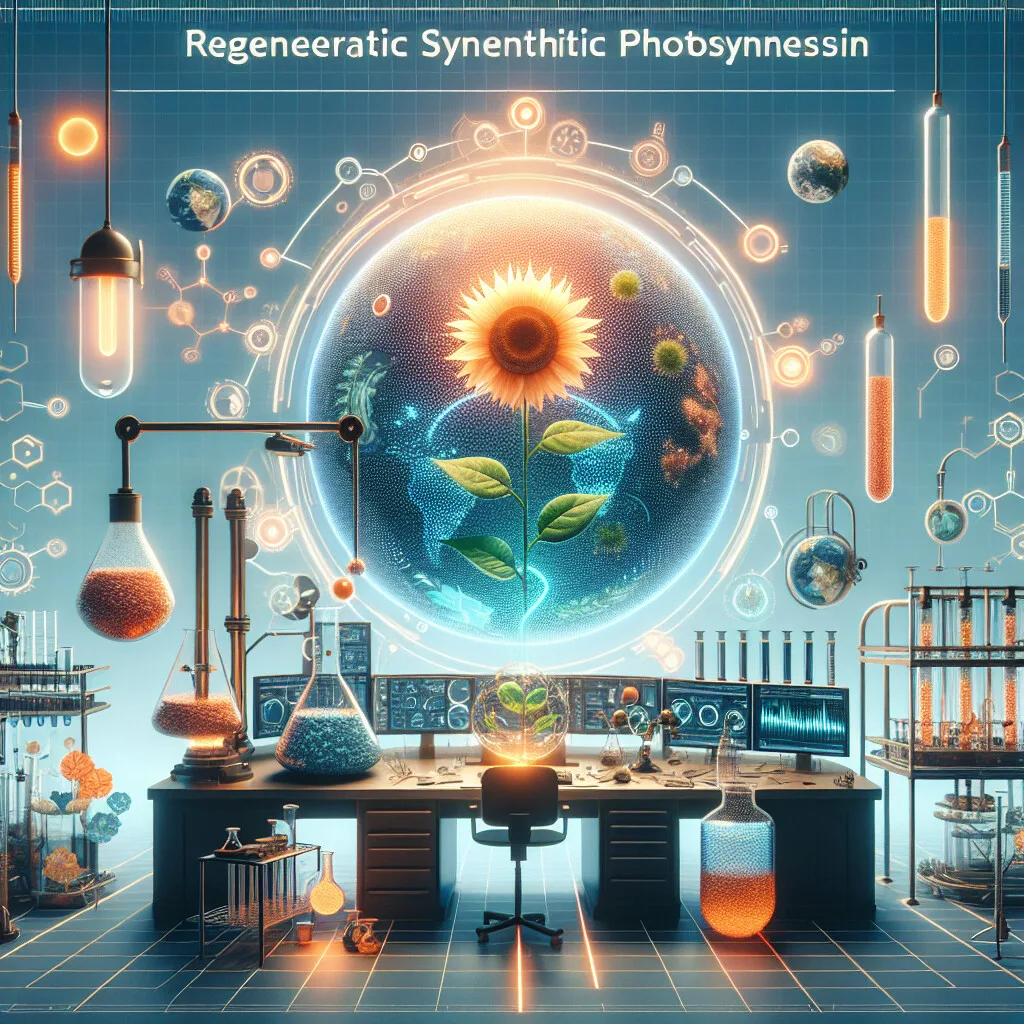
Introduction to Regenerative Synthetic Photosynthesis
Regenerative synthetic photosynthesis is an innovative approach that seeks to mimic nature’s process of photosynthesis while incorporating artificial components. This technology has the potential to revolutionize the way we generate energy, reducing our reliance on fossil fuels and mitigating climate change. By harnessing sunlight to convert carbon dioxide into oxygen and organic compounds, regenerative synthetic photosynthesis could provide a sustainable alternative to traditional methods of energy production.
In this article, we will delve deeper into the concept of regenerative synthetic photosynthesis, exploring its potential applications, current challenges, and future prospects. We will examine how AI-powered research can contribute to advancing this technology and creating a more efficient and environmentally friendly solution for global energy needs.
The Science Behind Regenerative Synthetic Photosynthesis
Photosynthesis is a complex process carried out by plants, algae, and some bacteria. During photosynthesis, these organisms absorb sunlight using specialized pigments such as chlorophyll and convert it into chemical energy in the form of ATP (adenosine triphosphate) and NADPH (nicotinamide adenine dinucleotide phosphate). This energy is then used to synthesize glucose from carbon dioxide and water.
Regenerative synthetic photosynthesis aims to replicate this process using artificial components, such as solar panels or bio-inspired materials, to capture sunlight and convert it into chemical energy. However, unlike natural photosynthesis, regenerative synthetic photosynthesis must also address the challenges associated with scaling up the technology for commercial applications, such as improving efficiency and reducing costs.
The Role of Artificial Intelligence in Regenerative Synthetic Photosynthesis
AI plays a pivotal role in advancing regenerative synthetic photosynthesis by facilitating the design and development of novel materials and architectures that mimic natural photosynthetic processes. Machine learning algorithms can analyze vast amounts of data related to light absorption, energy transfer, and reaction kinetics to identify optimal configurations for maximum efficiency. Additionally, AI-driven simulations can predict the performance of different systems under various environmental conditions, enabling researchers to optimize their designs before experimental validation.
Furthermore, AI can be used to optimize the development of artificial photosynthetic organisms that are more effective at capturing sunlight and converting it into chemical energy. By integrating machine learning with synthetic biology tools, scientists can create new biological pathways that enhance the efficiency of regenerative synthetic photosynthesis while minimizing its environmental impact.
Challenges and Opportunities in Regenerative Synthetic Photosynthesis
Despite its promise, regenerative synthetic photosynthesis faces several challenges before it can be widely adopted as a viable alternative to traditional energy production methods. Some of these challenges include:
- Scalability: To achieve commercial viability, regenerative synthetic photosynthesis must be scaled up efficiently while maintaining high efficiency and minimizing costs.
- Efficiency: The current efficiency of regenerative synthetic photosynthetic systems is lower than that of natural photosynthetic organisms, which limits their potential for large-scale energy production.
- Cost: Developing artificial components and materials suitable for scaling up regenerative synthetic photosynthesis remains a significant technological challenge.
- Environmental impact: Assessing the long-term environmental implications of regeneratively synthesizing carbon dioxide into organic compounds is crucial to ensure that this technology aligns with sustainable practices.
However, these challenges also present opportunities for innovation and growth:
- Developing novel materials and architectures: AI can be used to design new materials and architectures that overcome current limitations in regenerative synthetic photosynthesis, such as improved light absorption or increased efficiency.
- Optimizing artificial photosynthetic organisms: Machine learning algorithms can help optimize the development of more efficient artificial photosynthetic systems that better mimic natural photosynthesis.
- Scalable manufacturing: Advances in nanotechnology, 3D printing, and other fabrication techniques may enable the mass production of artificial components required for regenerative synthetic photosynthesis at a lower cost than current methods.
- Sustainability metrics: As regenerative synthetic photosynthesis becomes more widespread, it is essential to establish robust sustainability metrics that assess its impact on greenhouse gas emissions, water usage, and land use, ensuring that this technology aligns with environmental stewardship goals.
Conclusion and Future Prospects of Regenerative Synthetic Photosynthesis
In conclusion, regenerative synthetic photosynthesis offers a promising solution for reducing our reliance on fossil fuels and mitigating climate change through the efficient conversion of solar energy into chemical energy. While challenges must be addressed to overcome current limitations in scalability, efficiency, and cost, AI-driven innovations have the potential to unlock this technology’s full potential. As research continues to advance, regenerative synthetic photosynthesis may become a key component in the global transition towards renewable energy sources, providing sustainable solutions for future generations.