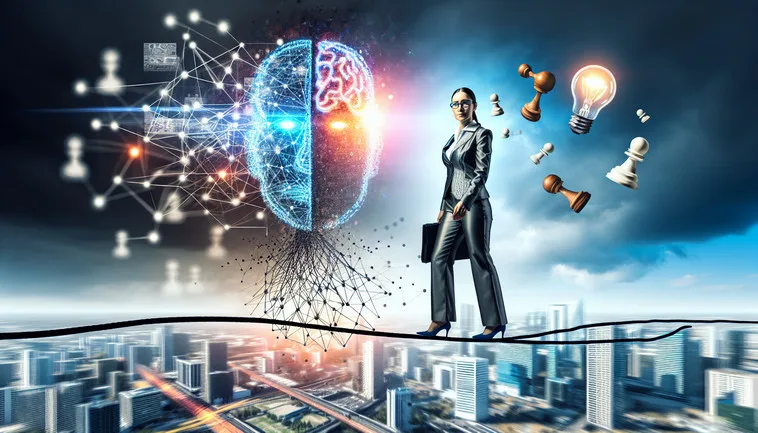
In the rapidly evolving landscape of artificial intelligence (AI) and its applications in business, leaders like Jamie Dimon, CEO of JPMorgan Chase, are experimenting with integrating these technologies into their everyday operations. Dimon has openly embraced AI for tasks such as memo writing and research, highlighting the efficiency and convenience these tools offer in managing routine activities. However, he remains steadfast in his belief that AI cannot substitute for the nuanced and complex human thought processes essential for strategic decision-making.
Dimon’s approach reflects a growing trend among industry leaders who utilize AI as an augmentation to human capabilities rather than a replacement. By automating mundane tasks, AI frees up valuable time for executives and employees to focus on more critical, innovative aspects of their business roles. This strategic delegation of duties allows businesses to operate more efficiently while enabling leaders to concentrate on high-level strategies and problem-solving tasks that demand human insight.
While AI excels at processing vast amounts of data at unprecedented speeds, its application is not without limitations. The technology, although highly advanced, is still largely tethered to the data it consumes, lacking the innate creativity and emotional intelligence that characterize human thought. This inherent limitation positions AI as a powerful tool in the corporate arsenal but not as a substitute for the human touch in decision-making processes.
The juxtaposition of AI capabilities in mundane tasks with human intellectual prowess in strategic initiatives illustrates the importance of a balanced approach in adopting technology. Businesses that effectively blend AI efficiencies with human ingenuity can gain competitive advantages, streamlining operations without sacrificing the depth and quality of critical analysis.
Other sectors, such as automotive, are applying similar attitudes toward AI. Tesla’s investors, for instance, recently considered Elon Musk’s performance-based pay plan, which exemplifies how human foresight and AI-driven analytics can coexist in the corporate arena. The market-driven decisions tied to Musk’s compensation package remind stakeholders that while technology can predict trends and suggest actions, it is ultimately the human element that understands and navigates the complex terrain of corporate growth and sustainability.
As AI continues to evolve and integrate into various sectors, the dialogue around its role in business will likely intensify. Leaders like Dimon are instrumental in steering this conversation, reminding industries of the crucial balance required between leveraging technology and maintaining the intellectual and ethical frameworks that underpin effective leadership and company culture.
In conclusion, while AI can undoubtedly enhance efficiency and productivity in writing and research, as highlighted by Jamie Dimon, it remains a tool that complements rather than replaces human capabilities. Those businesses that can harness AI to elevate their operations while preserving the unique contributions of human thought will be best positioned to thrive in the ever-changing business environment.