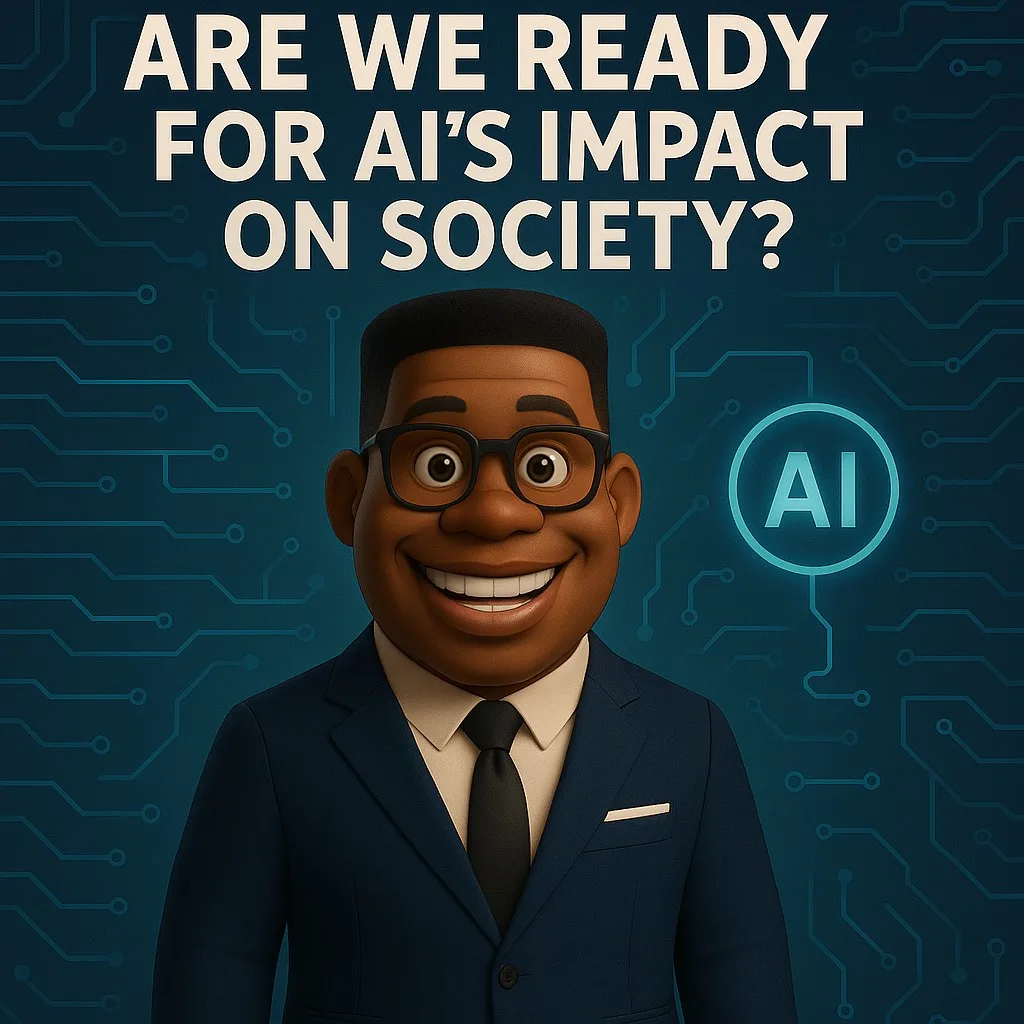
Are We Ready for AI’s Impact on Society?
Introduction: The Age of Artificial Intelligence
We are on the brink of one of the most transformative eras in human history—the AI revolution. From healthcare to finance, education to entertainment, artificial intelligence is reshaping virtually every aspect of how we live and work. But as AI continues to surge forward, one pressing question arises: Are we truly prepared for the impact AI will have on our society?
AI Is No Longer Fiction—It’s Now Reality
Gone are the days when artificial intelligence was confined to science fiction. Today, it’s integrated into our daily lives in a variety of ways:
- Voice assistants like Siri and Alexa help with everyday tasks.
- Recommendation algorithms on Netflix, YouTube, and Amazon tailor content and shopping experiences.
- Self-driving vehicles are being tested on public roads.
- AI-generated art and writing are making headlines around the globe.
AI is no longer just about convenience—it’s rapidly becoming a central force in business decision-making, scientific innovation, and even national security.
The Benefits of AI: Improving Lives Across the Board
Artificial intelligence carries an impressive array of benefits. Here’s how it’s helping society:
1. Healthcare Advancements
AI is revolutionizing healthcare:
- Predictive diagnostics use machine learning to detect diseases earlier and more accurately.
- Virtual nurses and chatbots offer 24/7 support, reducing strain on medical professionals.
- Drug discovery is accelerated using AI simulations, speeding up development processes by years.
2. Economic Growth
AI is expected to add trillions to the global economy over the next decade. According to PwC, AI could contribute up to $15.7 trillion to the global GDP by 2030.
- Automation of routine tasks boosts productivity.
- Data-driven insights improve efficiency in sectors like agriculture, manufacturing, and logistics.
3. Sustainability and Climate Change
AI systems are enabling smarter agricultural practices, improved energy efficiency, and real-time climate monitoring. These tools can help us take a more proactive approach to sustainability.
The Dark Side of AI: Risks and Challenges
With great power comes great responsibility—and considerable risk. Despite AI’s promising potential, it also poses significant threats if not managed properly.
1. Job Displacement
Automation is replacing many traditional jobs, especially those involving repetitive or manual processes. Some of the industries most at risk include:
- Manufacturing
- Retail and customer service
- Transportation
Though AI will also create new types of jobs, there’s growing concern that the pace of change could leave millions unemployed and without time to retrain or reskill.
2. Ethical Dilemmas
How should we program AI systems to make moral decisions? Do machines deserve rights if they reach sentience? What happens when AI is used for malicious purposes like deepfakes, surveillance, or autonomous weaponry? These are questions that require serious global discourse.
3. Bias and Discrimination
AI systems can inherit and even amplify the biases present in their training data. For example, facial recognition systems have been criticized for poor accuracy with people of color, which can lead to grave consequences, especially in law enforcement and hiring processes.
Are We Prepared for What’s Coming?
1. Regulatory Lag
Governments around the world are struggling to keep up with the rapid development of AI. While discussions are underway—such as the EU’s AI Act or the U.S. Blueprint for an AI Bill of Rights—there’s still a lack of cohesive, enforceable global regulation.
2. Education and Public Awareness
A large portion of the population still doesn’t fully understand how AI works or how it might affect their lives. There’s an urgent need to:
- Modernize education systems with AI-focused curriculum
- Empower consumers and workers with AI literacy
- Promote fact-based discourse to counter misinformation
3. Governance and Collaboration
To ensure AI benefits all humanity, international cooperation is key. Governments, tech companies, and civil societies must work together to establish frameworks that prioritize ethics, transparency, accountability, and inclusivity.
Preparing for an AI-Driven Future
We are not powerless in the face of technological change. With deliberate planning and ethical implementation, AI can be a force for global good. Here’s how we can prepare:
1. Prioritize Human-Centered AI
Policies and products must be designed with human values at their core. Empathy, fairness, and respect for individual rights must guide innovation.
2. Strengthen Legal and Ethical Safeguards
Enforceable global standards must be put in place to prevent the misuse of artificial intelligence technologies.
3. Invest in Workforce Reskilling
Prepare workers for the digital age by funding programs in STEM education, vocational retraining, and lifelong learning.
4. Promote Transparency in AI Systems
AI should not be a black box. Users need clear explanations for how decisions are made, especially in high-stakes domains like healthcare, finance, and law enforcement.
Final Thoughts: Embrace AI Responsibly
The rise of AI is inevitable—but its consequences are not predetermined. What happens next depends on how seriously we take these challenges today. We must balance technological progress with human dignity, opportunity, and ethics.
So, are we ready? Maybe not yet. But with the right measures in place, we can be.
Let us choose to shape a future where AI works with us, not against us.
Interested in the future of AI and innovation? Subscribe to our blog for more insights, deep dives, and opinion pieces on the evolving world of technology.